
Sustainability & Sourcing Guide
Introduction: Why Recycled Plastic Bottle Umbrellas Are Now a Procurement Priority
A few years ago, sourcing umbrellas with canopies made from recycled plastic bottles was a differentiator — a sustainability story a brand could tell to stand out. Today it is increasingly a baseline requirement. Retail buyers in Europe and North America are facing growing pressure from their own procurement policies, investor ESG frameworks, and consumer expectations to demonstrate that the products they sell are made from responsible materials. For umbrella buyers, the RPET canopy has become the clearest, most verifiable way to meet that requirement.
The good news is that the performance case for RPET umbrellas is now as strong as the sustainability case. RPET canopy fabric is durable, water-resistant, colorfast, and fully compatible with the printing and branding processes that B2B buyers require. This guide explains how RPET fabric is made, what to look for when evaluating a supplier, and how GRS certification protects your brand from greenwashing risk.
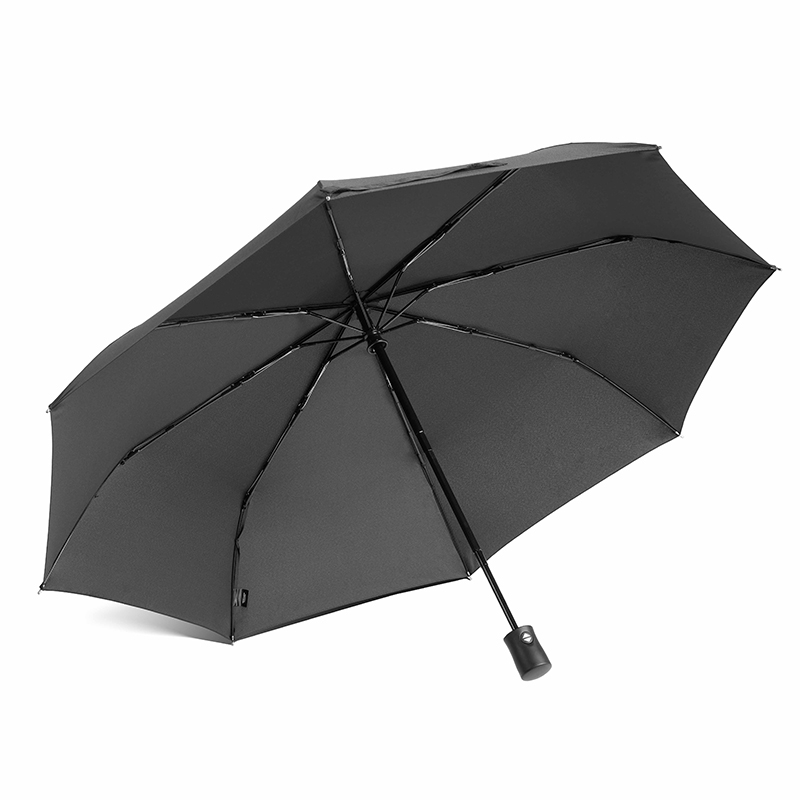
→ See TopUmbrella's RPET folding umbrella (TU2162) — 190T Pongee RPET canopy with rain-revealed colour-changing pattern, auto open & close, GRS-certified fabric.
Market Context: The Sustainability Shift Reshaping Umbrella Procurement
ESG Requirements Are Driving Material Decisions
Corporate sustainability commitments have moved from voluntary pledges to binding procurement criteria at many of the world's largest retailers and brand groups. Supplier sustainability questionnaires now routinely ask whether promotional and branded merchandise uses recycled or certified materials. Umbrellas — traditionally produced from virgin polyester — have come under particular scrutiny because the category is high volume, frequently replaced, and historically difficult to recycle at end of life. The shift to recycled plastic bottle umbrellas addresses this directly: every RPET canopy repurposes between 8 and 12 post-consumer plastic bottles, diverting measurable waste from landfills and waterways.
The RPET Umbrella Market Is Maturing Fast
What began as a niche product segment has become mainstream. Major sportswear brands, hospitality groups, and corporate gifting programs now specify RPET fabric as standard — not premium — for their umbrella programs. The supply chain has scaled to match: RPET fabric is now reliably available in a broad range of weights, weave constructions, and colorways, and the price premium over virgin polyester has narrowed significantly as production volumes have increased. For buyers who have not yet made the transition, the material cost argument for staying with virgin polyester has largely disappeared.
How Umbrellas with Canopies Made from Recycled Plastic Bottles Are Produced
From Bottle to Fabric: The Production Process
The transformation from a post-consumer plastic bottle to a finished umbrella canopy involves several distinct manufacturing stages. Used PET bottles are first collected, sorted by color and resin type, and cleaned to remove contaminants. The cleaned bottles are then shredded into small PET chips, which are melted and extruded through spinnerets to produce continuous filament fiber. This fiber is spun into polyester yarn, then woven into the fabric used for umbrella canopy panels. The resulting material — RPET Pongee, typically at 190T or 210T weight — is functionally equivalent to virgin polyester in tensile strength, tear resistance, and UV stability, while using significantly less energy to produce.

Performance Characteristics: What RPET Delivers
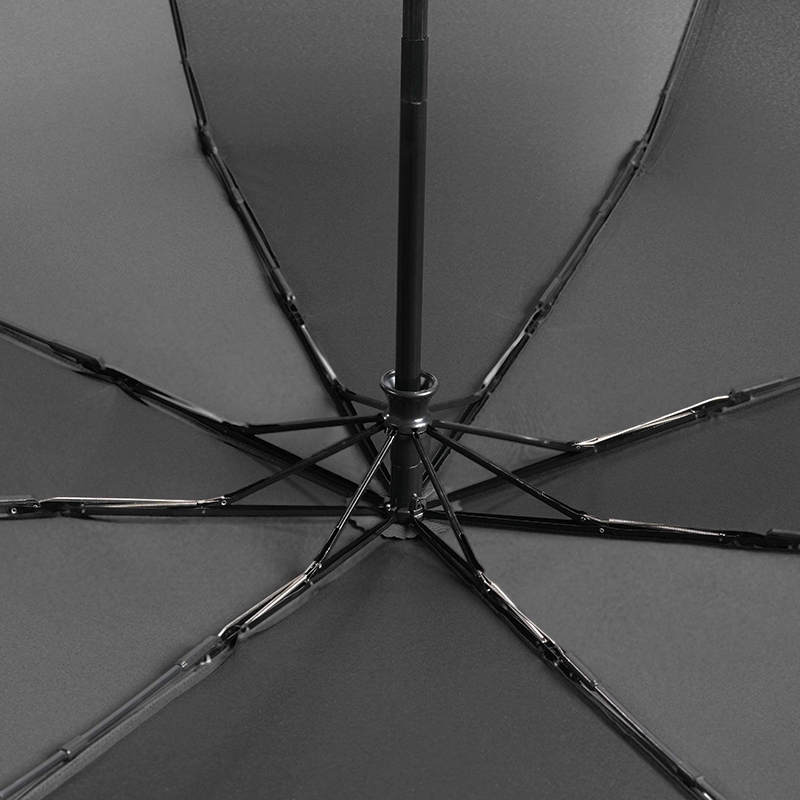
A common concern among buyers new to RPET is whether recycled fabric can match the performance of virgin polyester in demanding outdoor conditions. TopUmbrella's TU2162 uses 190T Pongee RPET — a tightly woven, smooth-matte construction that dries quickly, resists wrinkles, and holds colour registration through repeated washing and outdoor exposure. The key quality variable is the consistency of the RPET yarn used, which is why GRS certification rather than a manufacturer's unverified claim is the appropriate standard to require.
| Property | Virgin Polyester | RPET (Recycled Plastic Bottles) |
|---|---|---|
| Tensile Strength | High | Equivalent — meets same standards |
| Water Repellency | PU or DWR coating | Same coating options available |
| Print Compatibility | Screen, digital, heat transfer | Fully compatible — Pantone matching available |
| Carbon Footprint | High — virgin petrochemical inputs | Up to 60% lower energy in production |
| ESG Documentation | No recycled content claims | GRS certification + bottles-diverted data |
| Price vs. Virgin | Baseline | Narrow premium — gap closing with scale |
GRS Certification: Why It Matters More Than a Supplier's Word
The growth of sustainable product claims has been accompanied by a parallel growth in greenwashing — marketing language that implies environmental benefits without independent verification. For buyers procuring recycled plastic bottle umbrellas, the distinction between a verified recycled material claim and an unverified one has real legal and reputational consequences. The GRS (Global Recycled Standard) was developed specifically to close this gap.
GRS certification provides third-party verification that a product contains a specified percentage of recycled input material, and that the chemicals used in processing meet defined safety and environmental standards. For a buyer including RPET umbrellas in a sustainability report, a corporate gifting catalogue, or a retail range with eco-friendly positioning, GRS documentation is the difference between a defensible claim and a liability. Several major retail chains now mandate GRS or equivalent certification as a condition of supplier listing for products marketed as sustainable.
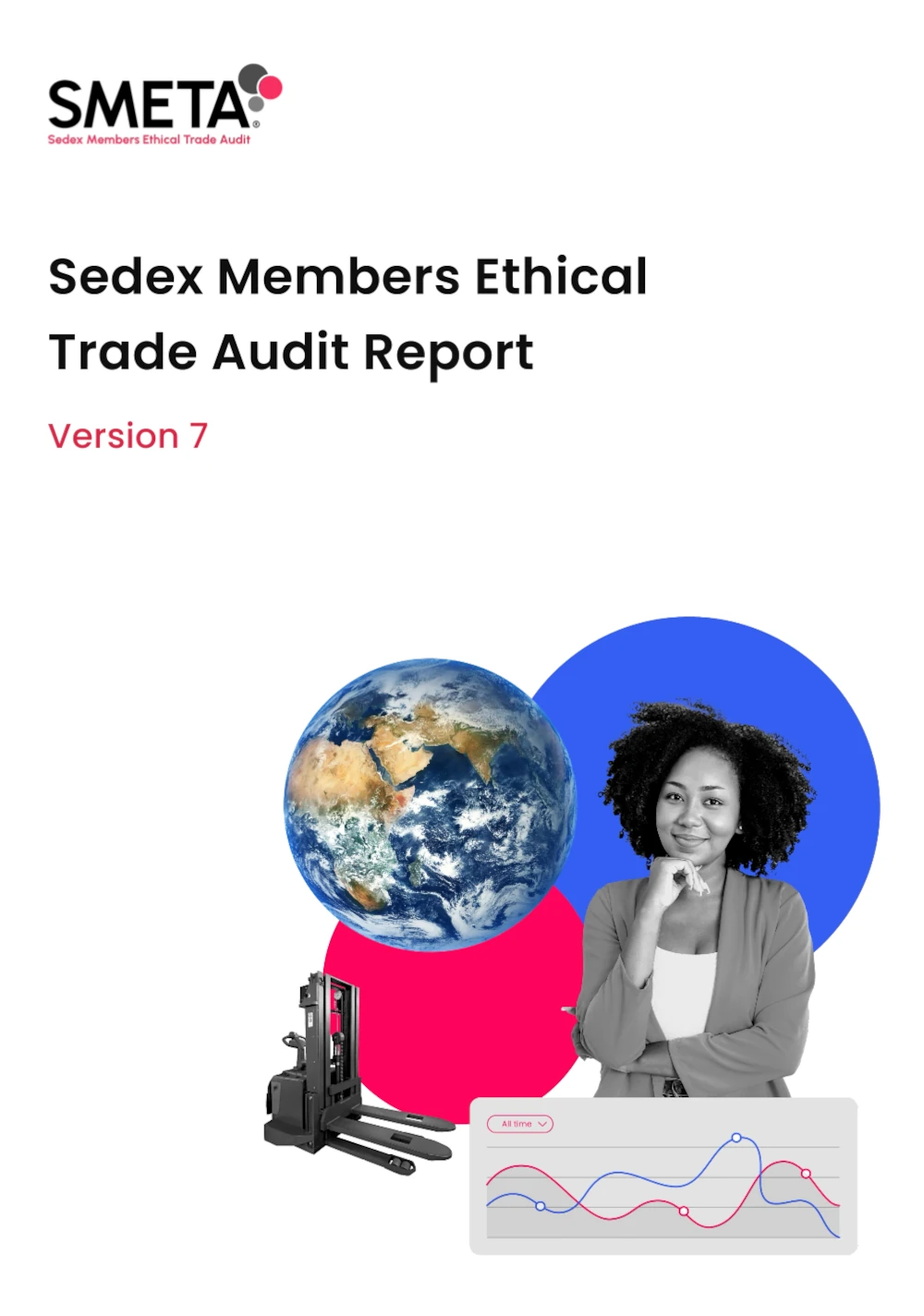
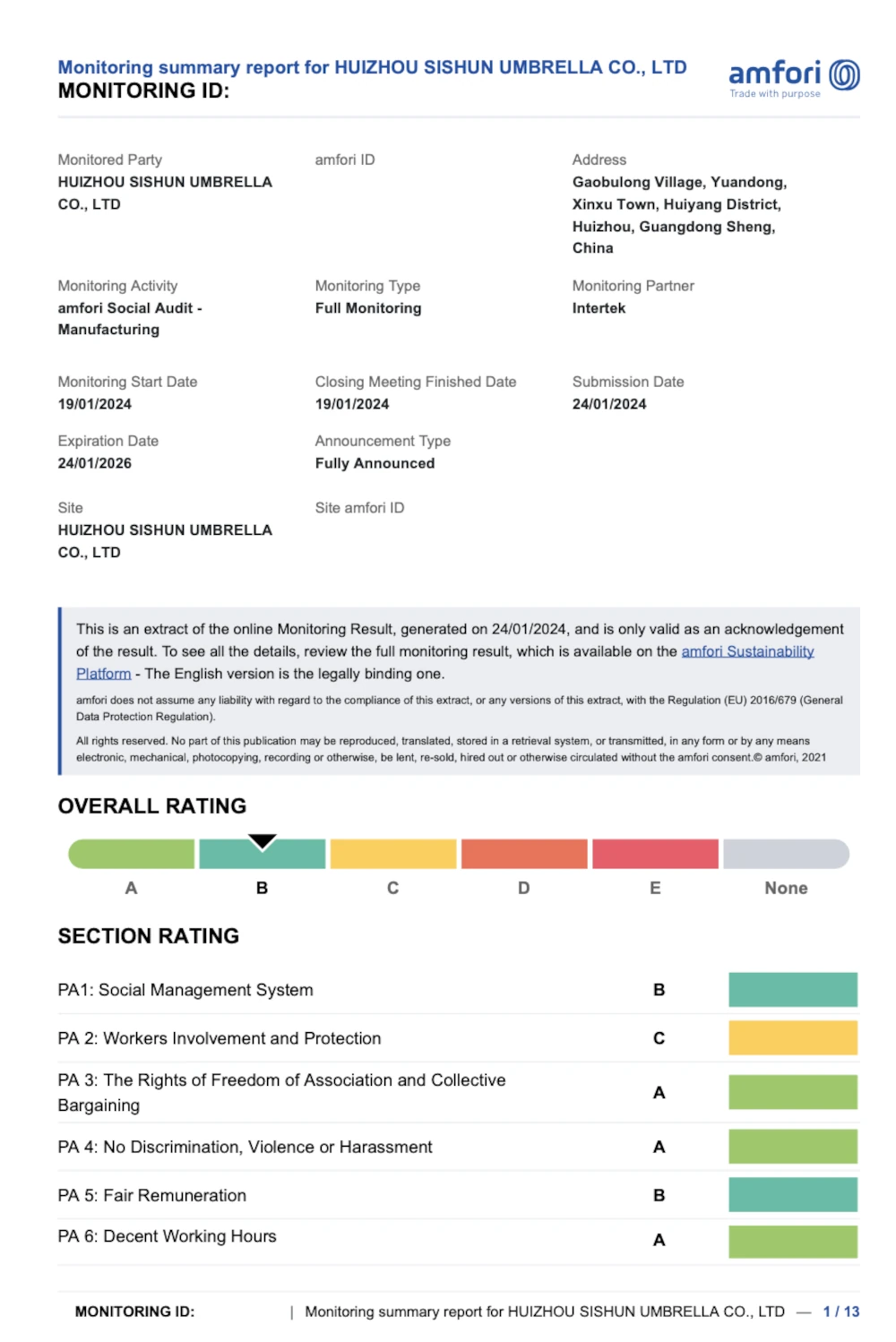
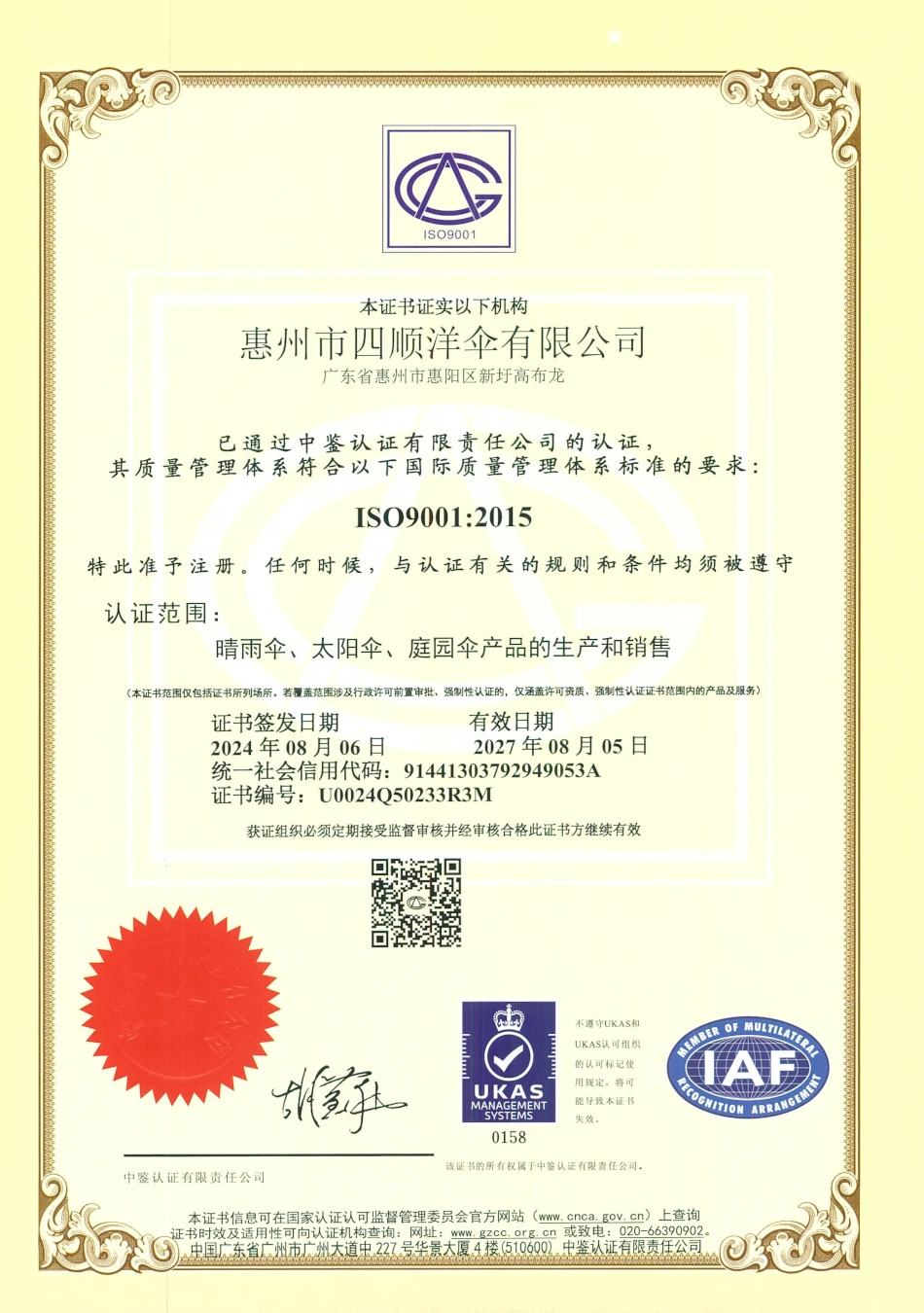
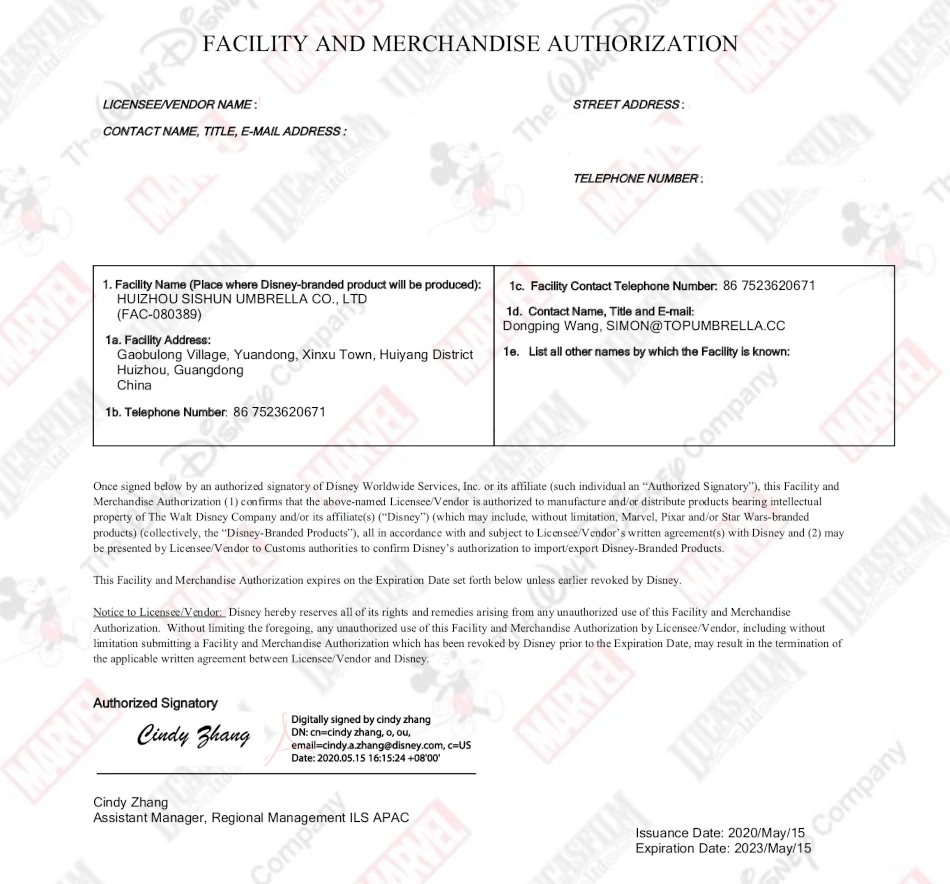
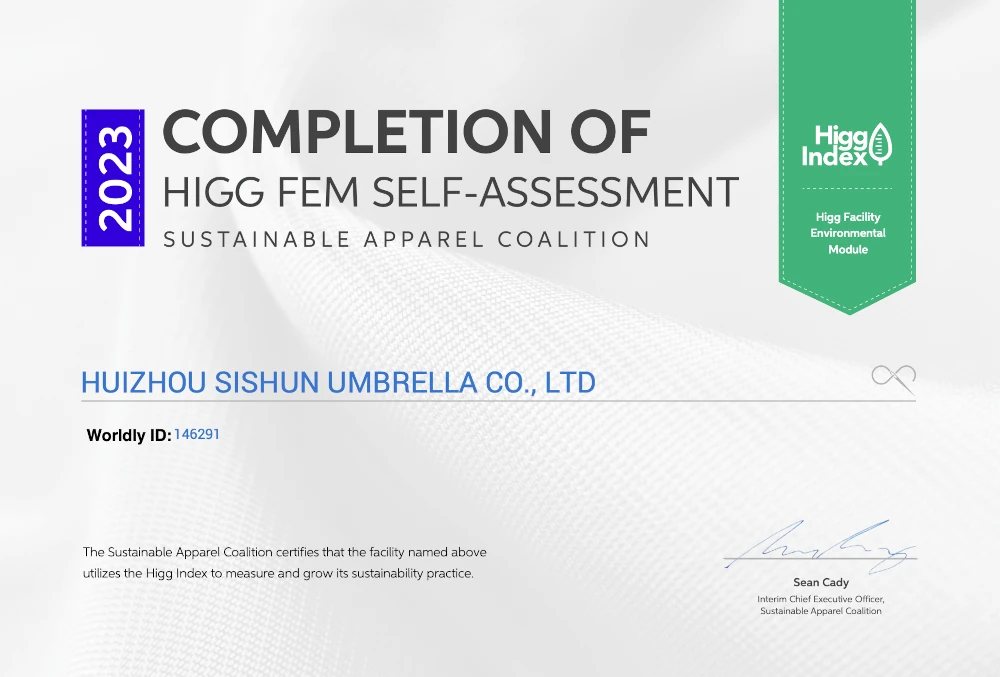
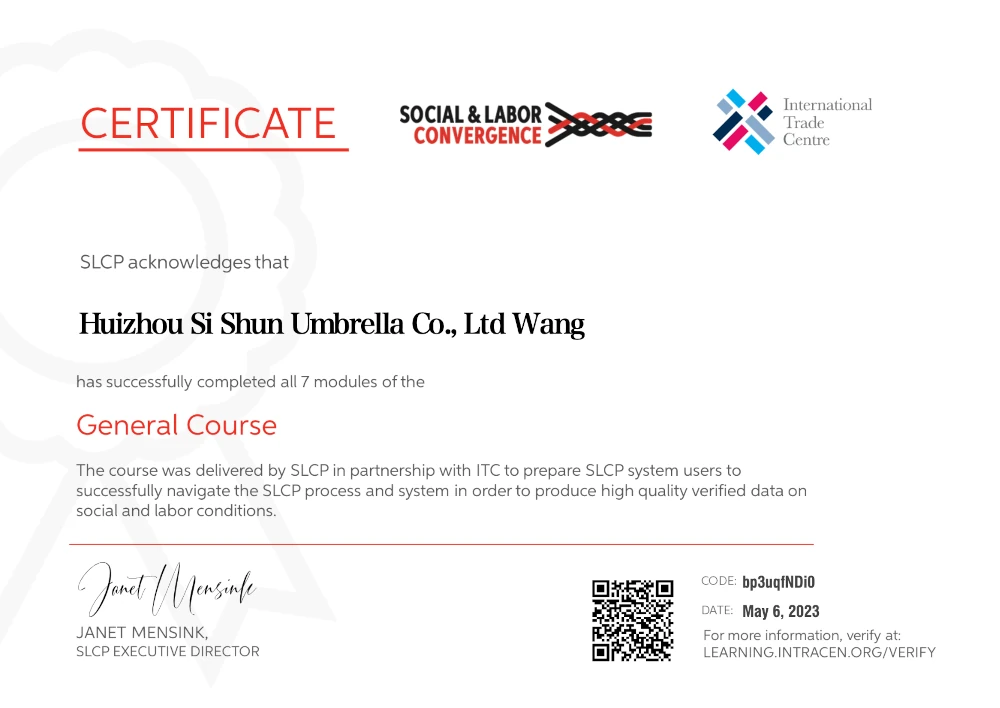
→ View the complete list of TopUmbrella certifications — SEDEX, BSCI, Disney/FAMA, ISO9001, Higg FEM, SLCP, GRS, SGS (PFAS-free), and more — on our Certifications page.
Beyond the Canopy: Building a Fully Sustainable Umbrella
For brands with comprehensive sustainability commitments, an RPET canopy alone may not be sufficient. Increasingly, buyers are evaluating the full bill of materials — handle, ribs, shaft, packaging, and coatings — against their ESG criteria. The supply chain for sustainable umbrella components has matured significantly alongside RPET fabric adoption.
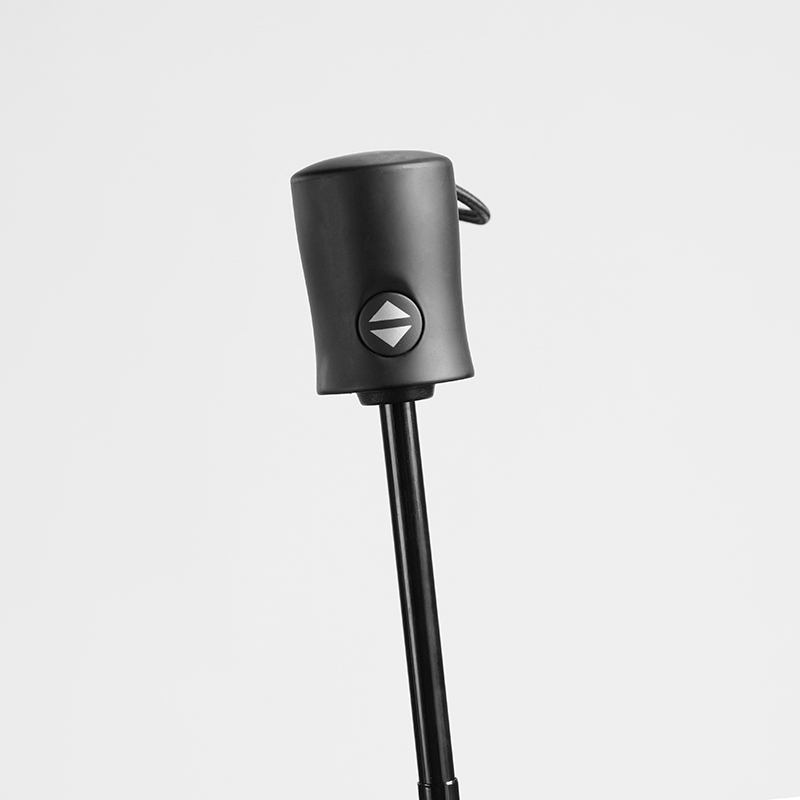
Handles made from 100% PCR (Post-Consumer Recycled) ABS plastic replace virgin plastic while maintaining the same structural integrity. Bamboo handles offer a natural, low-embodied-carbon alternative with a distinctive premium aesthetic. Fiberglass ribs — already standard in quality umbrella construction for their flexibility and wind resistance — have a lower environmental footprint than steel in lifecycle assessments. Water-repellent coatings can be specified as PFAS-free, eliminating the fluorinated chemical concerns that have become a compliance issue in the EU market. Taken together, these choices allow a brand to source an umbrella that tells a coherent, documentable sustainability story from canopy to carry pouch.
→ Read TopUmbrella's detailed guide on Sustainable Material Choices for Umbrellas — covering RPET, PCR ABS, bamboo, and PFAS-free coatings.
Why TopUmbrella for Your RPET Umbrella Program
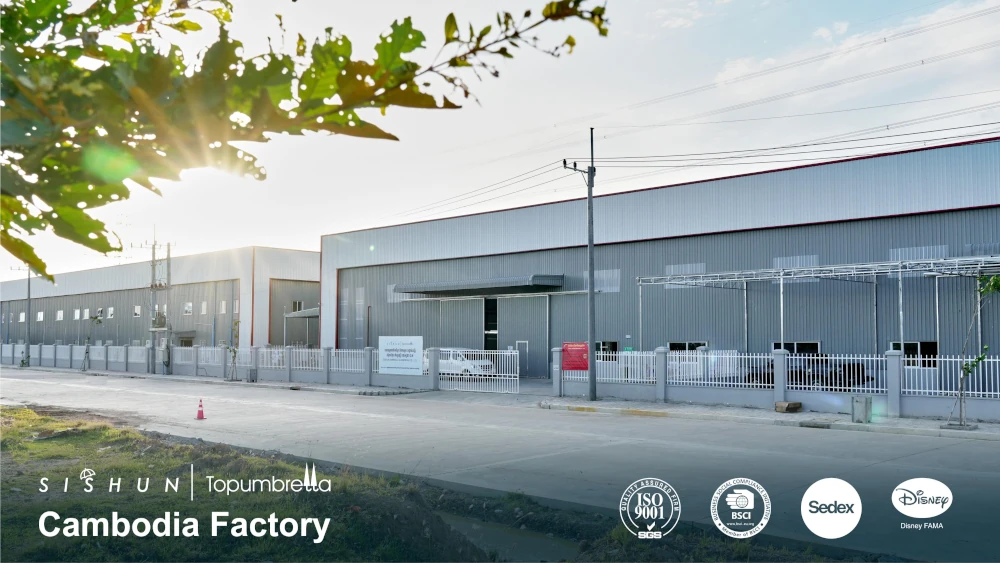
TopUmbrella has been manufacturing umbrellas with canopies made from recycled plastic bottles for global brands since sustainability first became a material procurement criterion. The company's RPET umbrella range is backed by GRS certification, supported by an in-house testing laboratory, and produced in factories partially powered by rooftop solar energy. TopUmbrella has been invited to PUMA's Sustainability Round Table and has supplied RPET umbrella programs to leading sportswear and retail brands across Europe and North America.
Featured Product — TU2162: 23" folding RPET umbrella with 190T Pongee RPET canopy, rain-revealed colour-changing pattern, auto open & close, Steel + Fiberglass ribs, 368g, 29cm closed. Available for OEM branding. View product →
GRS-Certified RPET Fabric: Independently verified recycled content. Each canopy diverts 8–12 post-consumer plastic bottles from landfill. Full certification documentation on our Certifications page.
Full Certification Portfolio: SEDEX, BSCI, Disney/FAMA, ISO9001, Higg FEM, SLCP, GRS, SGS (PFAS-free), ROHS. The most comprehensive audit and certification coverage in the umbrella manufacturing category. See all certifications →
Sustainable Bill of Materials: RPET canopy fabric, 100% PCR ABS plastic handles, PFAS-free water-repellent coatings, and bamboo handle options — available as a complete eco-configured umbrella or as individual sustainable component upgrades.
ESG Documentation Support: GRS certificates, SGS test reports, bottles-diverted data, Higg FEM environmental scores, BSCI audit reports, and material transparency documentation — everything your sustainability team needs for procurement reporting and ESG disclosures. All available on request.
OEM Customization & MOQ: Full custom colour, logo printing (screen, digital, heat transfer), handle configuration, and branded packaging. MOQ from 500 pcs per style. One free sample available — buyer covers shipping. See our FAQ for full details.
→ Browse the full Mini Umbrellas range including TU2162, or download the Product Catalog for complete RPET umbrella specifications.
Conclusion: Source RPET Umbrellas That Hold Up to Scrutiny
Sourcing umbrellas with canopies made from recycled plastic bottles is no longer a niche sustainability initiative — it is a mainstream procurement decision that affects brand positioning, retail compliance, ESG reporting, and increasingly, supplier eligibility. The RPET umbrella market has matured to the point where performance, price, and supply chain availability are no longer barriers. The remaining variable is supplier credibility — and that is where GRS certification, documented test reports, and a verifiable sustainability program separate genuine manufacturers from those making unverified claims.
TopUmbrella brings GRS-certified RPET fabric, a full suite of social and environmental certifications, solar-powered production, and 20 years of OEM manufacturing experience to every RPET umbrella program. Whether you are sourcing for a corporate gifting campaign, a retail range, or a branded promotional program, the documentation and manufacturing capability are in place to support your requirements.
Source GRS-Certified RPET Umbrellas for Your Brand
Share your program brief with TopUmbrella. We'll provide a factory quote, full certification documentation, and free sample options for your evaluation.
Get a Factory Quote →


