
Industry Education & Technical Guide
Why "Forever Chemicals" in Textiles Have Become a Supply Chain Issue
In April 2026, Texas Attorney General Ken Paxton issued a Civil Investigative Demand to activewear brand Lululemon, opening a formal inquiry into whether its products contain PFAS — per- and polyfluoroalkyl substances — that its wellness-focused marketing would lead consumers not to expect. The probe examines the company's Restricted Substances List, internal testing protocols, and supply chain practices. The story attracted significant attention. But for textile industry professionals, the underlying issue is not new: PFAS have been a live compliance question in apparel, outdoor gear, and technical fabrics for over a decade — and the regulatory environment around them has been tightening steadily.
This article is not about any single brand's compliance situation. It is about the technical question at the center of the debate: how do you make a textile fabric waterproof without using PFAS? And what does that mean for umbrella manufacturers, procurement teams, and brands that source weather-protective products?
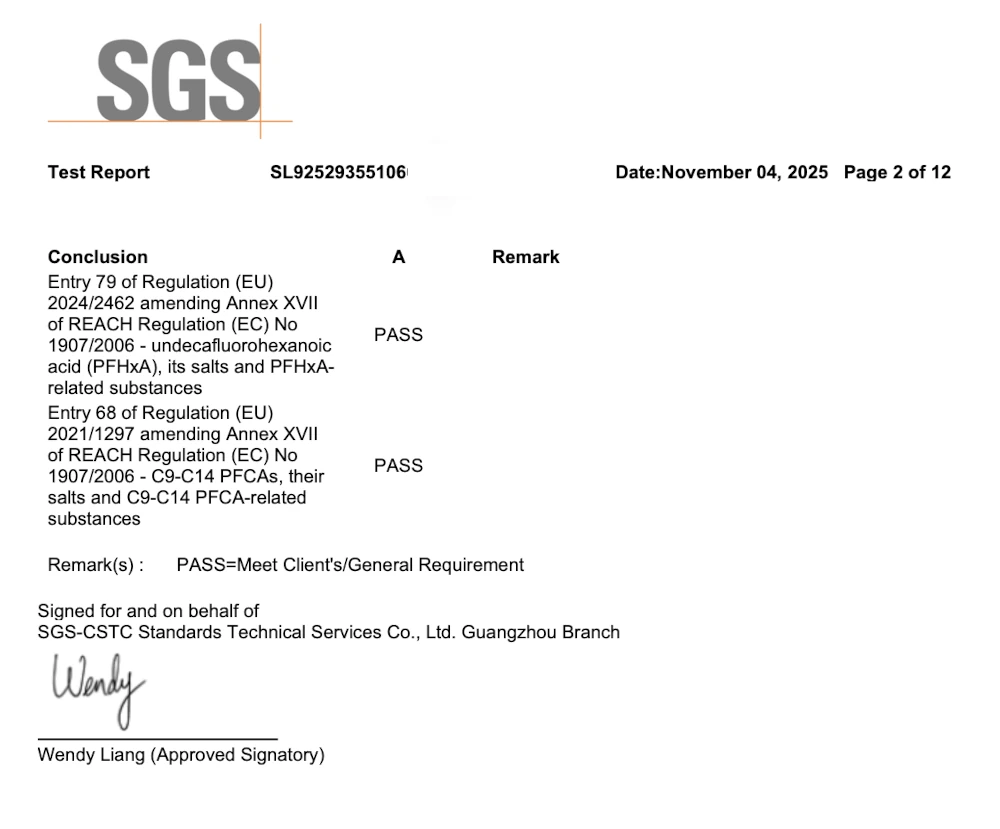
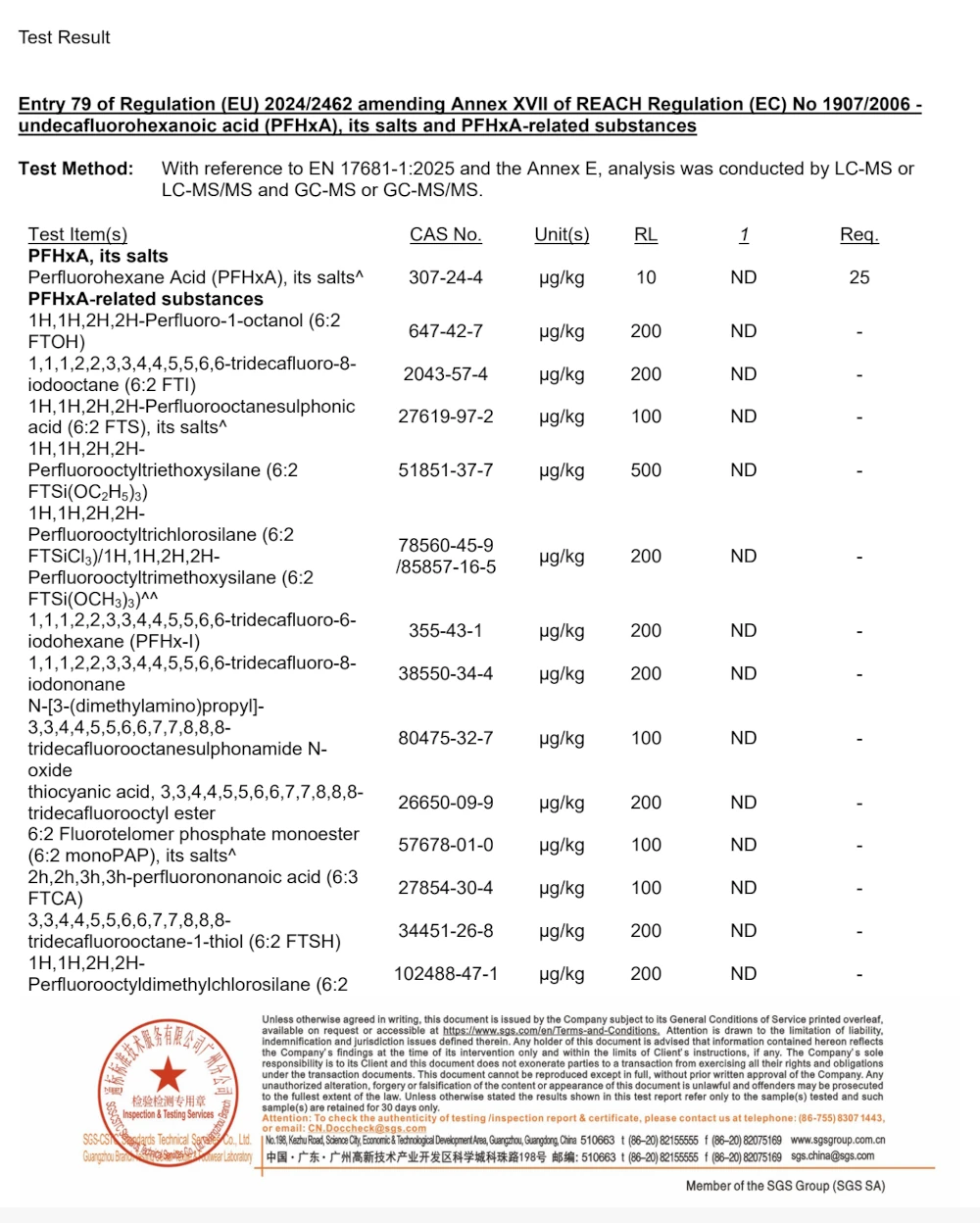
→ TopUmbrella's SGS-verified PFAS-free folding umbrella demonstrates that waterproof performance and chemical compliance are fully compatible — with documented test results available on request.

Issued by SGS
What PFAS Are and How They Became Standard in Waterproof Textiles
The Chemistry Behind "Forever Chemicals"
PFAS are a family of more than 9,000 synthetic compounds defined by their carbon-fluorine bonds — among the strongest in organic chemistry. This extraordinary molecular stability is precisely what made them attractive to the textile industry: a PFAS-based coating applied to fabric could repel water, oil, and stains with remarkable persistence. The treatment lasted through dozens of washes. It was cost-effective to apply. And for decades, it was the default technology behind the "durable water repellent" (DWR) finishing that makes outdoor and performance fabrics shed rain rather than absorb it.
The same chemical stability that made PFAS functionally useful turned out to be its fundamental environmental problem. PFAS do not break down in soil, water, or biological tissue. They accumulate. Studies have now detected PFAS compounds in Arctic wildlife, in drinking water systems, and in the bloodstreams of the overwhelming majority of the human population. Prolonged exposure has been linked in scientific literature to elevated cholesterol, reduced immune response, liver damage, developmental effects in children, and certain cancers including kidney disease. The label "forever chemicals" is not hyperbole — it is an accurate description of their environmental persistence.
The Regulatory Journey: C8 to C6 to C0
The textile industry's response to PFAS concerns has followed a pattern of incremental substitution that regulators and scientists have increasingly found inadequate. The original DWR chemistry — C8, based on eight-carbon fluorinated chains — was effectively phased out by the US EPA in 2016 following its identification as a probable carcinogen. The industry's initial response was to adopt C6 chemistry: a shorter fluorinated chain believed to be less bioaccumulative. But subsequent research found C6 to share many of the same environmental persistence characteristics. While C6 may accumulate less in living organisms, it is still a PFAS — still persistent, still synthetic, and still showing up in ecosystems where it does not belong. The move from C8 to C6 was, in the assessment of most researchers, a half-step rather than a solution.
The logical endpoint is C0: a category of DWR chemistry that contains zero fluorocarbon chains. No PFAS at all. The question for procurement teams is whether C0 coatings can deliver the waterproof performance that PFAS-based treatments have historically provided — and what the trade-offs are.
How C0 Coating Makes Fabric Waterproof Without PFAS
The Mechanism: Surface Tension Rather Than Fluorine
All DWR coatings — whether fluorinated or not — work by altering the surface tension of fabric. When the surface energy of a treated textile is lower than the surface tension of water, water molecules cannot spread across the fabric surface. Instead, they form beads and roll away. The difference between PFAS-based and PFAS-free DWR is not the functional principle but the chemistry used to achieve it. C0 DWR works by creating a protective, nano-scale layer on the surface of the textile fibers, typically based on silicone or dendrimer technology. This layer changes the fabric's surface tension, making it extremely difficult for water to spread and wet out the material — instead, water forms tight beads and rolls away.
The practical result for umbrella canopy fabric is that a properly specified C0-coated pongee or polyester fabric can shed water effectively under normal rain conditions — which is precisely the performance specification required for consumer and commercial umbrella use. Unlike high-performance outdoor apparel that may need to withstand sustained heavy rain for extended periods, an umbrella canopy's waterproof requirement is primarily about shedding rain quickly while maintaining fabric lightness and dryability. C0 coating meets this requirement reliably.

An Honest Technical Comparison: Where C0 Performs Well and Where It Differs
Responsible procurement decisions require understanding both the advantages and the genuine limitations of C0 chemistry. For umbrella applications, the relevant performance metrics are water shedding, dryability, and durability through repeated open-close cycles — not the oil repellency or extreme sustained-rain resistance that high-end mountaineering gear requires. On those umbrella-specific metrics, C0 performs on par with C6. Where differences exist, they are in applications outside umbrella use: C0 does not repel oily substances the way fluorinated coatings do, and in prolonged heavy-rain endurance testing for technical outerwear, performance might drop off a little faster than with C6 or C8, but the difference is narrowing with each generation of innovation. For umbrellas, these distinctions are not operationally relevant.
| Property | C8 DWR | C6 DWR | C0 DWR (PFAS-Free) |
|---|---|---|---|
| PFAS Content | Yes — long-chain (8C) | Yes — short-chain (6C) | None — fluorine-free |
| Water Repellency | Excellent | Very good | Good — sufficient for umbrella use |
| Oil Repellency | Excellent | Good | Limited — not required for umbrellas |
| Environmental Persistence | Very high — banned by EPA 2016 | High — still PFAS | Biodegradable — no accumulation |
| Regulatory Status (US) | Banned | Restricted (CA, NY from 2025) | Fully compliant |
| Regulatory Status (EU) | Banned | Phase-out from 2026 under REACH | Fully compliant |
| Tear Strength Effect | Neutral | Neutral | Improved vs C6/C8 |
The Regulatory Landscape: What Buyers Need to Know Now
United States: State-Level Bans Already in Force
California and New York have enacted bans on textile articles and apparel containing PFAS, effective January 1, 2025. Colorado commenced a phased approach to prohibit PFAS in outdoor apparel for severe wet conditions that same day. These are not proposed regulations — they are in force. California's law (AB 1817) broadly defines covered products to include not just apparel but accessories, bags, backpacks, and other textile goods. Penalties for non-compliance reach $10,000 per first violation, with daily accumulation for continuing violations. Starting in 2026, Maine, Vermont, Rhode Island, Colorado, and Connecticut are poised to roll out similar PFAS prohibitions in textile articles. By any reasonable forecast, PFAS-containing textile products will face restricted market access across the majority of the US within three years.
European Union: REACH Phase-Out Underway
The EU restricted C9–14 PFCAs and related substances in February 2023. Restrictions on PFHxA and related substances begin in April 2026. From January 2026, EU REACH will ban the manufacture, import, export, and sale of PFAS-containing textiles, footwear, and waterproofing agents for consumers. France has enacted its own national law effective January 2026. Denmark's ban on PFAS-containing clothing and shoes for consumers takes effect in July 2026. Brands distributing into European markets without a confirmed PFAS-free supply chain face immediate compliance risk.
Issued by SGS
Issued by SGS
Industry Certification: Bluesign and SGS
Beyond government regulation, industry certification bodies have moved ahead of legislation. Bluesign — the global sustainability standard for textile manufacturing — now requires all bluesign-approved articles and products to be free from intentionally added PFAS from January 2025, with limited exceptions for essential uses such as personal protective equipment. SGS PFAS-free certification, based on REACH testing protocols, provides independent third-party verification that a specific product contains no detectable PFAS at the testing threshold. For procurement teams, supplier-held SGS certification on specific products is the most direct form of documented assurance currently available.
Why PFAS Compliance Is a Procurement Issue for Umbrella Buyers
Umbrellas are not activewear. But they are textile products — and the regulatory frameworks taking effect in the US and EU broadly cover textile goods including accessories. More immediately, umbrella programs distributed as corporate gifts, branded merchandise, or retail products in California, New York, or EU markets are now subject to the same PFAS compliance requirements as any other textile. A procurement manager sourcing a custom eco-friendly umbrella program for a brand with sustainability commitments faces the same documentation requirement as one sourcing outerwear: a certificate of compliance from the manufacturer, and ideally independent test verification.
The brand risk dimension is equally real. The enforcement mechanism for PFAS bans is not limited to government action. Consumer litigation against brands that make sustainability claims while distributing PFAS-containing products has already begun in the US, with cases filed in Washington, Missouri, and Illinois. A brand that markets its promotional merchandise as eco-friendly or sustainable, while sourcing umbrellas with C6-coated fabric, faces the same legal exposure as a performance apparel brand in an equivalent position.
For ESG-compliant suppliers and buyers with active sustainability programs, the umbrella category presents an opportunity that is often overlooked: umbrellas are one of the most visible branded items a company distributes, and a PFAS-free umbrella manufacturer with documented certification can turn what might be a compliance liability into a positive brand story.

Issued by SGS
TopUmbrella's PFAS-Free Umbrella Program: Verified, Not Just Claimed
The distinction between a PFAS-free claim and a verified PFAS-free product is precisely the issue at the center of the broader industry debate. At TopUmbrella, PFAS-free status on specific products is independently verified by SGS — one of the world's leading inspection and certification organizations — with test reports available on request. This is not a marketing statement. It is a documented test result against the REACH PFAS testing standard, specific to the product in question.
SGS PFAS-Free Certification: Independent third-party testing confirms zero detectable PFAS in canopy fabric, verified to REACH standards. Full SGS test report available on request. View our PFAS-free folding umbrella →
C0 Coating Technology: PFAS-free DWR applied to umbrella canopy fabric using non-fluorinated chemistry. Delivers reliable water-shedding performance for umbrella use while eliminating the regulatory and health risks of C6 or C8 treatments.
Full Certification Portfolio: BSCI, SEDEX, DISNEY, ISO9001, SGS (PFAS-free), ROHS, GRS. Covers the compliance requirements of major retail chains in North America and Europe. See our sustainability and certification program for the full picture.
Sustainable Production: Rooftop solar energy across our China facility, RPET fabric options (GRS-certified), and 100% PCR ABS plastic handles — supporting brands with comprehensive ESG reporting requirements across the full product bill of materials.
OEM Custom Programs: Full customization available across PFAS-free umbrella lines — fabric color, logo printing, handle and frame configuration, branded packaging. MOQ from 500 pcs. Free sample available for product evaluation. See our FAQ for details.
→ View our SGS-certified PFAS-free folding umbrella with full product specifications and test documentation, or explore our Forever Better sustainability program for the full scope of our environmental commitments.
Future of PFAS-Free Textile Finishing
From Chemical Substitution to Material Innovation
As global regulations tighten and brands accelerate their ESG commitments, PFAS-free solutions are no longer a short-term adjustment — they are driving a broader transformation in textile finishing technologies. The next generation of water-repellent performance will depend less on traditional fluorinated chemistry and more on advanced material science, surface engineering, and cleaner production methods. In other words, the future of PFAS-free finishing is not simply about removing one class of chemicals, but about rethinking how functional performance is created from the ground up.
Bio-Based Coatings
One of the most promising directions is the development of bio-based coatings derived from renewable resources. These next-generation formulations aim to reduce dependence on petrochemical-based finishes by using plant-based or biodegradable inputs while still delivering reliable water repellency. Although many solutions are still evolving in terms of durability and commercial scale, bio-based coatings are increasingly attractive to brands looking to align material choices with circular economy goals and lower-impact sourcing strategies.
Plasma Treatment
Plasma treatment represents a highly innovative approach to PFAS-free textile finishing. Rather than applying an additional chemical layer, plasma technology modifies the fabric surface at a microscopic level, improving its interaction with water through precise surface activation or restructuring. Because it is typically a dry process, plasma treatment can reduce chemical consumption, wastewater generation, and energy use, making it especially relevant for manufacturers pursuing scalable and lower-impact finishing technologies.
Nano-Structured Surfaces
Another important long-term trend is the use of nano-structured surfaces inspired by natural water-repellent systems such as the lotus leaf. Instead of relying mainly on chemical composition, this approach creates water repellency through engineered micro- and nano-scale textures that encourage droplets to bead and roll off the fabric surface. In advanced applications, these structures may also contribute to self-cleaning performance. While still emerging in large-scale commercial textile production, nano-structured surface design points toward a future where performance is increasingly achieved through physical architecture rather than chemical dependency.
In summary, the future of PFAS-free textile finishing lies in combining cleaner chemistry, smarter surface engineering, and more integrated product design. For brands and procurement teams, this shift matters because it suggests that long-term competitive advantage will not come from a simple one-to-one replacement for fluorinated coatings, but from choosing suppliers who understand how to balance sustainability, functionality, and manufacturability at the material level.
Conclusion: PFAS-Free Performance Is Now the Right Default
The activewear industry's current PFAS scrutiny is a visible signal of a regulatory and market direction that has been building for years. The practical lesson for any brand or procurement team sourcing water-repellent textile products — including umbrellas — is straightforward: the technical case for staying with fluorinated coatings has narrowed significantly, while the compliance risk of continuing to use them has grown substantially. C0 PFAS-free DWR chemistry delivers the water-shedding performance needed for umbrella applications, with no environmental persistence and full compatibility with the regulatory frameworks now in force across the US and EU.
The standard for responsible sourcing in this area is no longer a voluntary aspiration — it is a documented, verifiable requirement. For sustainable umbrella manufacturers and eco-friendly umbrella suppliers who have already made this transition and can provide SGS test reports, GRS certification, and full supply chain documentation, the question for procurement teams is not whether to require PFAS-free compliance. It is which supplier can prove it.
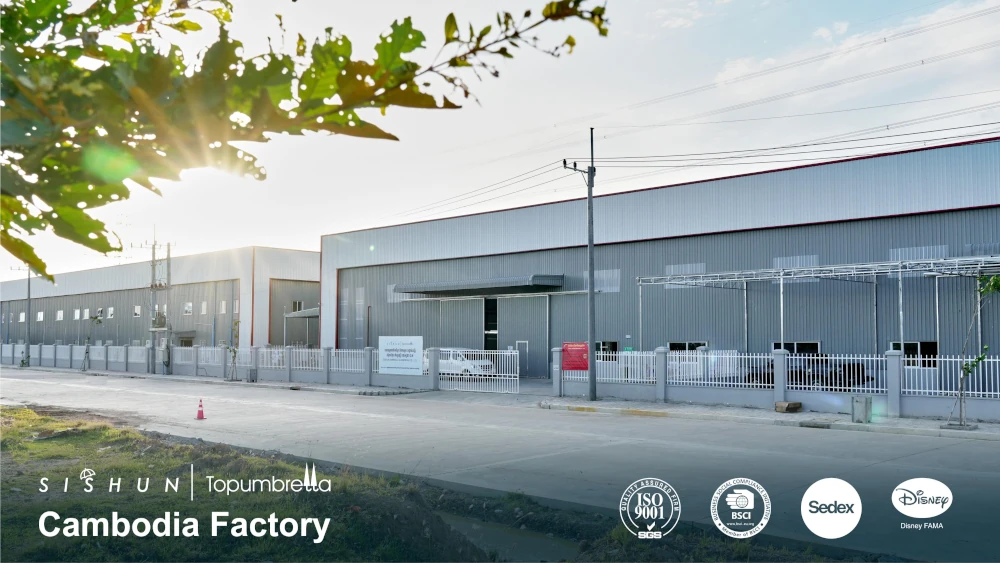
→ View our TopUmbrella sustainable PFAS-free umbrella manufacturer factory with full specifications.
Source Verified PFAS-Free Umbrellas for Your Brand
TopUmbrella provides SGS-certified PFAS-free umbrella programs with full test documentation, GRS certification, and OEM customization. Contact us to request a factory quote, test reports, and free sample.
Get a Factory Quote →


